
Emerging AI Technologies to Watch in 2026
Artificial intelligence is no longer a futuristic concept reserved for tech giants. In 2026, AI has become one of the most practical business tools available for companies of every size. From automating repetitive tasks to improving customer experiences, emerging AI technologies are transforming how businesses operate, compete, and grow.
One of the biggest trends shaping the AI landscape today is the rise of intelligent automation. Modern AI platforms can now handle customer support, content creation, data analysis, appointment scheduling, and even sales follow-ups with minimal human intervention. This allows businesses to save valuable time while improving operational efficiency.
Another breakthrough innovation is AI-powered personalization. Companies are using machine learning algorithms to understand customer behavior and deliver highly targeted experiences. Whether it’s personalized email campaigns, product recommendations, or automated marketing strategies, AI helps brands connect with customers on a deeper level while increasing conversion rates.
Voice AI and conversational assistants are also becoming more advanced and natural. Businesses are integrating AI chatbots and virtual assistants into websites, CRM systems, and mobile applications to provide 24/7 support. Unlike older chatbot systems, today’s AI assistants can understand context, answer complex questions, and provide human-like interactions that improve customer satisfaction.
For small businesses, the accessibility of AI tools is creating new opportunities to compete with larger enterprises. Affordable cloud-based AI solutions now allow startups and local businesses to automate workflows without needing a dedicated IT department. This shift is helping companies reduce costs, streamline operations, and scale faster than ever before.
Cybersecurity is another area seeing rapid AI innovation. Businesses are now using AI systems to detect suspicious activities, identify vulnerabilities, and prevent cyber threats in real time. As online security risks continue to grow, AI-driven protection tools are becoming essential for modern organizations.
The future of AI is focused on simplicity, speed, and real-world results. Businesses that adopt these technologies early are positioning themselves ahead of competitors while creating more efficient and profitable operations. As AI continues to evolve, companies that embrace innovation today will be better prepared for tomorrow’s digital economy.
AI Predictions from Industry Leaders
Artificial intelligence is evolving faster than most businesses expected, and industry leaders believe the next few years will completely redefine how companies operate. From automation and predictive analytics to intelligent customer experiences, AI is becoming a core part of modern business strategy rather than an optional technology upgrade.
Many technology experts predict that AI will soon become as essential as the internet itself. Businesses are already relying on AI tools to automate repetitive tasks, generate marketing content, analyze customer behavior, and improve decision-making processes. As these tools become more advanced, companies that fail to adopt AI risk falling behind competitors who move faster and operate more efficiently.
One major prediction from industry leaders is the widespread adoption of AI copilots in the workplace. These intelligent assistants are designed to help employees complete tasks faster, reduce human error, and improve productivity across departments. From customer support teams to finance and marketing professionals, AI copilots are expected to become standard tools in daily operations.
Another growing trend is hyper-personalization powered by AI. Experts believe businesses will increasingly use machine learning to create highly customized customer journeys. Websites, advertisements, emails, and product recommendations will become smarter and more tailored to individual user behavior, helping brands increase engagement and conversions.
AI-driven decision-making is also expected to reshape leadership and business planning. Companies will use predictive analytics to forecast trends, monitor performance, and identify growth opportunities with greater accuracy. This allows organizations to make data-driven decisions faster while minimizing operational risks.
Security and compliance are another major focus for the future of AI. Industry leaders predict stronger AI-powered cybersecurity systems capable of identifying threats before they cause damage. Businesses handling sensitive customer data will increasingly rely on intelligent monitoring systems to strengthen digital protection and maintain trust.
Perhaps the most important prediction is accessibility. AI is no longer limited to large corporations with massive budgets. Affordable software solutions and user-friendly platforms are making advanced AI capabilities available to startups, freelancers, and small businesses worldwide.
The future belongs to businesses that adapt quickly and embrace innovation strategically. As AI technology continues to advance, organizations that invest early will gain a significant advantage in productivity, customer experience, and long-term growth.
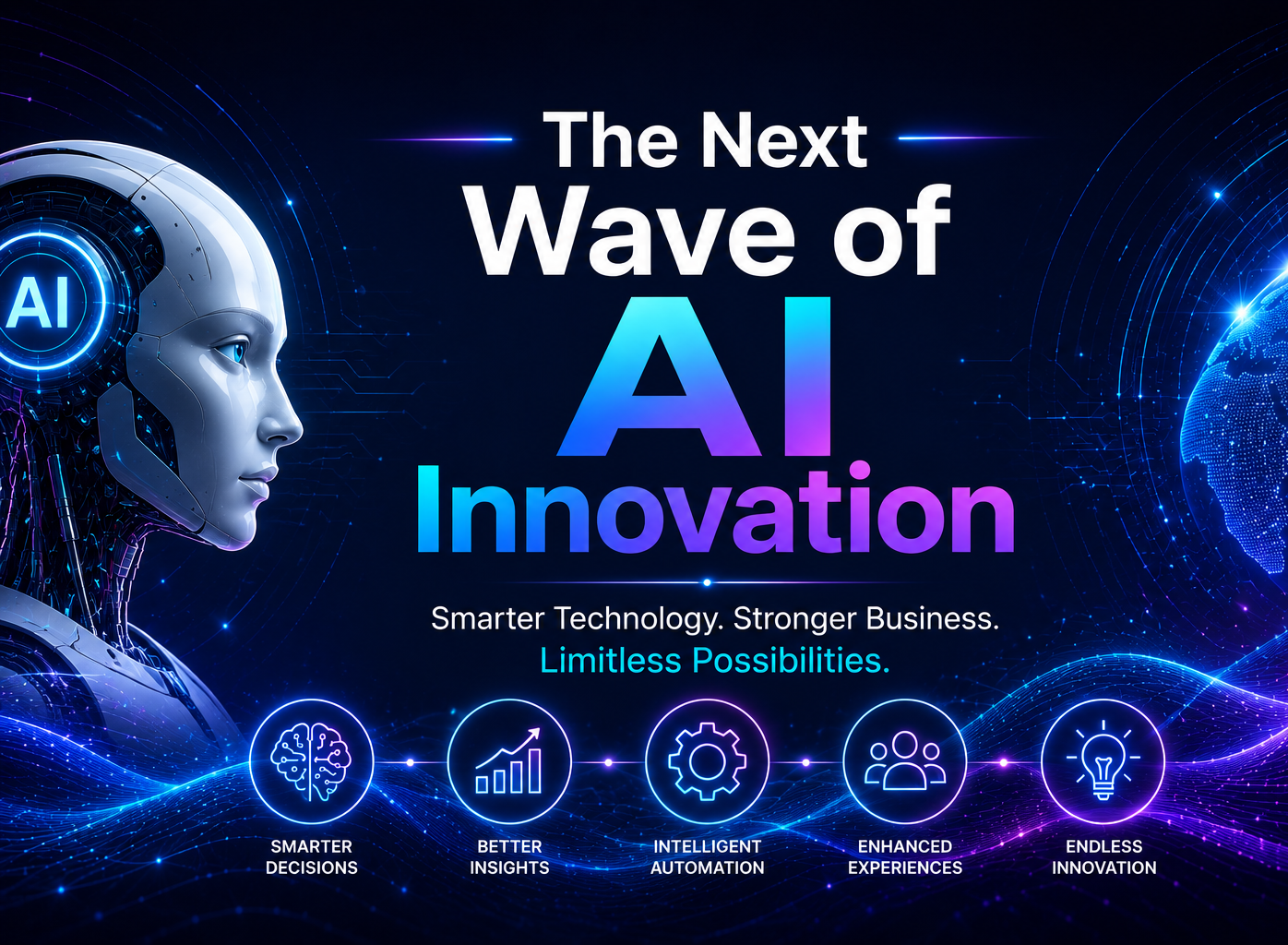
The Next Wave of AI Innovation
The next wave of artificial intelligence innovation is transforming businesses at an unprecedented pace. What was once considered advanced technology is now becoming an everyday business solution, helping companies automate operations, improve customer experiences, and increase profitability.
One of the most exciting developments in AI is the rise of multimodal systems. These advanced AI tools can process text, images, audio, and video simultaneously, allowing businesses to create smarter workflows and more engaging digital experiences. Companies can now generate marketing materials, analyze customer interactions, and automate creative processes using a single intelligent platform.
Generative AI continues to lead the innovation movement. Businesses are using AI to write content, create graphics, generate reports, build websites, and even develop software code. This dramatically reduces production time while helping teams focus on strategy and growth rather than repetitive manual work.
AI-powered analytics is another game-changing trend. Modern businesses collect enormous amounts of data, but turning that information into actionable insights has always been a challenge. Today’s AI systems can analyze customer behavior, market trends, and operational performance in real time, helping companies make faster and smarter decisions.
The healthcare, education, and e-commerce industries are also seeing major breakthroughs. AI-driven learning platforms are creating personalized educational experiences, while healthcare providers use machine learning to improve diagnostics and patient care. In e-commerce, intelligent recommendation engines are increasing customer engagement and boosting online sales.
Businesses are also embracing AI for workflow automation. Tasks such as scheduling appointments, responding to emails, processing invoices, and managing customer inquiries can now be automated with remarkable accuracy. This not only improves efficiency but also reduces operational costs and employee burnout.
Another key innovation is the growing focus on ethical and responsible AI. Companies are prioritizing transparency, data privacy, and fairness as AI adoption expands globally. Businesses that implement ethical AI practices are more likely to build customer trust and long-term brand credibility.
The next generation of AI tools is designed to be faster, smarter, and easier to use. Even non-technical users can now integrate AI into daily operations without extensive training or complex infrastructure. As innovation accelerates, businesses that embrace AI today will be better equipped to adapt, compete, and thrive in the future digital economy.
Preparing Your Business for AI Disruption
Artificial intelligence is reshaping industries faster than ever before, and businesses that fail to prepare risk being left behind. AI disruption is no longer a future possibility — it is already transforming how companies market, communicate, operate, and serve customers. The businesses that adapt early are gaining significant advantages in efficiency, innovation, and profitability.
One of the first steps in preparing for AI disruption is understanding where automation can create the biggest impact. Many businesses still spend countless hours on repetitive administrative tasks that can now be handled by AI-powered systems. Customer service, scheduling, lead generation, content creation, and data entry are just a few areas where automation can reduce workload while improving speed and accuracy.
Another important strategy is investing in employee adaptability. AI is not replacing every job, but it is changing how work gets done. Companies that provide AI training and digital skill development will create stronger, more future-ready teams. Employees who understand how to work alongside AI tools can increase productivity and contribute more strategically to business growth.
Businesses should also evaluate their current technology infrastructure. Modern AI tools integrate with websites, CRMs, marketing platforms, and communication systems to create seamless workflows. Companies that modernize outdated systems will find it easier to implement AI solutions efficiently and scale operations faster.
Customer expectations are also evolving because of AI. Consumers now expect faster responses, personalized experiences, and around-the-clock support. AI-powered chatbots, recommendation systems, and intelligent marketing tools help businesses meet these expectations while improving customer satisfaction and retention rates.
Data management is becoming increasingly important in the AI era. Companies that organize and analyze their business data effectively can make smarter decisions and identify opportunities faster. AI-driven analytics tools allow organizations to forecast trends, monitor customer behavior, and optimize business performance in real time.
Cybersecurity should also remain a top priority during AI adoption. As businesses become more digitally connected, protecting sensitive customer and operational data becomes essential. AI-powered security systems can help detect unusual activity, prevent cyber threats, and strengthen overall data protection strategies.
The future of business belongs to organizations willing to innovate and evolve. AI disruption is creating both challenges and opportunities, but companies that take proactive steps today will be in the best position to succeed tomorrow. Preparing early allows businesses to stay competitive, improve efficiency, and build long-term resilience in an increasingly AI-driven world.
Comments are closed