
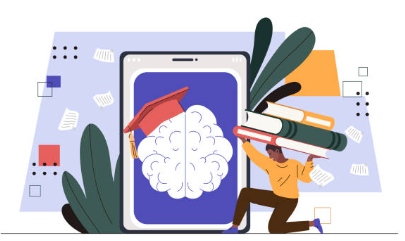
How AI Will Transform Education by 2030
Artificial Intelligence (AI) is no longer a futuristic concept—it’s already reshaping classrooms, online learning platforms, and the way students engage with knowledge.
By 2030, the future of AI in education will be defined by personalization, accessibility, and innovation, creating opportunities that were unimaginable just a decade ago.
🎯 Personalized Learning at Scale
One of the most powerful impacts of AI will be hyper-personalized learning experiences. Instead of a one-size-fits-all curriculum, AI-driven platforms will analyze student performance in real time, adapting lessons to individual strengths and weaknesses. Imagine a math app that instantly identifies where a student struggles and provides tailored exercises until mastery is achieved. This level of customization will help learners progress faster and more confidently.
🌍 Breaking Barriers to Access
By 2030, AI will play a critical role in making education more inclusive. Intelligent translation tools will allow students from different linguistic backgrounds to access the same resources. AI-powered tutors will provide affordable, 24/7 support, bridging gaps for communities with limited access to teachers. For learners with disabilities, adaptive technologies—such as voice recognition and predictive text—will ensure equal participation in classrooms worldwide.
🧠 Smarter Teachers, Not Replaced Teachers
Contrary to fears of AI replacing educators, the future points toward AI as a teaching assistant. Teachers will leverage AI to automate grading, track student progress, and design data-driven lesson plans. This frees up time for educators to focus on mentorship, creativity, and emotional support—the human elements of teaching that machines cannot replicate.
🚀 Preparing Students for the Future Workforce
AI will also transform curriculum design. By 2030, schools will integrate AI literacy into core subjects, ensuring students understand how to work alongside intelligent systems. Skills like critical thinking, creativity, and ethical decision-making will be emphasized, preparing graduates for jobs that don’t even exist yet.
The future of AI in education by 2030 is not about replacing teachers or traditional learning—it’s about enhancing them. With personalized learning, global accessibility, and smarter teaching tools, AI will empower students and educators alike. The challenge lies in ensuring ethical use, data privacy, and equitable access so that every learner benefits from this transformation.
Discover how AI will transform education by 2030 through personalized learning, smart tools, and global access
🔮 Future of AI 2025–2035: Predictions You Need to Know
Artificial Intelligence (AI) is evolving faster than ever, and the next decade will redefine how we live, work, and connect. Between 2025 and 2035, the future of AI will be marked by breakthroughs in automation, personalization, and ethics.
Businesses, educators, and everyday consumers need to prepare for a world where intelligent systems are everywhere.
🚀 AI-Powered Workflows
By 2025, AI will already be embedded in most business operations. From automated customer service to predictive analytics, companies will rely on AI to streamline workflows. By 2035, expect AI to act as a “co-pilot” for professionals—handling repetitive tasks while humans focus on creativity, leadership, and innovation.
🧠 Smarter Healthcare
The future of AI in healthcare will be transformative. AI-driven diagnostics will detect diseases earlier, while personalized treatment plans will improve patient outcomes. By 2030, wearable devices powered by AI will monitor health in real time, reducing hospital visits and empowering individuals to take control of their wellness.
📚 Education Reinvented
AI will reshape classrooms worldwide. Between 2025 and 2035, personalized learning platforms will adapt lessons to each student’s pace and style. Intelligent tutors will provide 24/7 support, breaking barriers for learners in underserved communities. Schools will also integrate AI literacy into core subjects, preparing students for jobs that don’t yet exist.
🌍 Ethical AI & Governance
As AI becomes more powerful, ethics and governance will take center stage. Expect stricter regulations around data privacy, algorithm transparency, and bias prevention. By 2035, global frameworks will likely emerge to ensure AI benefits society without deepening inequality.
🛒 Everyday AI
From smart homes to personalized shopping, AI will become invisible yet indispensable. Imagine refrigerators that order groceries automatically, or AI assistants that anticipate your needs before you ask. By 2035, AI companions may play a role in emotional support, entertainment, and lifestyle management.
The future of AI from 2025 to 2035 is not about replacing humans it’s about augmenting them. With smarter workflows, healthcare breakthroughs, personalized education, and ethical safeguards, AI will empower individuals and organizations to thrive. The challenge lies in adopting these technologies responsibly, ensuring that innovation serves everyone.
Explore how AI will reshape education by 2030 with personalized learning, smart tools, and global access.
🌐 Top 10 Future AI Trends That Will Shape Our World
Artificial Intelligence (AI) is advancing at lightning speed, and the next decade will redefine how we live, work, and interact. From healthcare to entertainment, the future of AI promises breakthroughs that will shape society in profound ways. Here are the top 10 AI trends to watch between now and 2035.
1. Hyper-Personalized Learning
AI-driven platforms will tailor education to each student’s pace, style, and strengths, making classrooms more inclusive and effective.
2. AI-Powered Healthcare
From predictive diagnostics to real-time monitoring, AI will revolutionize patient care, reducing costs and improving outcomes.
3. Autonomous Transportation
Self-driving cars, drones, and smart traffic systems will reshape mobility, reducing accidents and optimizing urban planning.
4. Generative AI Creativity
AI will move beyond text and images to create music, films, and even scientific discoveries, blurring the line between human and machine creativity.
5. AI in Cybersecurity
With cyber threats growing, AI will act as a digital guardian—detecting, preventing, and responding to attacks faster than humans.
6. Smart Cities
AI-powered infrastructure will manage energy, waste, and traffic, creating sustainable and efficient urban environments.
7. AI Companions
Virtual assistants will evolve into emotional companions, offering support, entertainment, and personalized recommendations in daily life.
8. Ethical AI & Governance
Expect stricter regulations around bias, transparency, and data privacy as governments and organizations push for responsible AI use.
9. AI in Business Automation
From lead generation to supply chain management, AI will streamline operations, allowing companies to scale faster with fewer resources.
10. AI + Quantum Computing
The fusion of AI and quantum computing will unlock unprecedented problem-solving power, transforming industries from finance to pharmaceuticals.
The future of AI trends is not about replacing humans—it’s about augmenting them. By embracing these innovations responsibly, we can unlock smarter healthcare, safer cities, and more creative opportunities. The challenge lies in balancing progress with ethics, ensuring AI benefits everyone.
No responses yet